Climate change rarely announces itself with the urgency of a breaking-news alert — at least not at the moment when intervention is still possible. By the time disaster dominates headlines, the underlying processes have long been underway. More often, it advances incrementally: in tenths of a degree, in receding shorelines, in data points that struggle to compete with spectacle. The media, structured around immediacy and event-driven reporting, often find it difficult to sustain attention on crises that unfold slowly, systemically, and unevenly.
In this conversation, Dr. Robert R. Janes — a museologist with more than five decades of experience — reflects on the ethical responsibilities of cultural institutions amid deepening social and ecological uncertainty, pointing to a role they could play in complementing journalism’s work. But only if they relinquish the comfort of neutrality. Drawing on a career spanning museum leadership, scholarship, and activism, he calls on these organisations — uniquely positioned to cultivate long-term thinking — to rethink their ethical foundations, confront uncomfortable truths, and leverage the public trust they hold to foster not just awareness but agency.
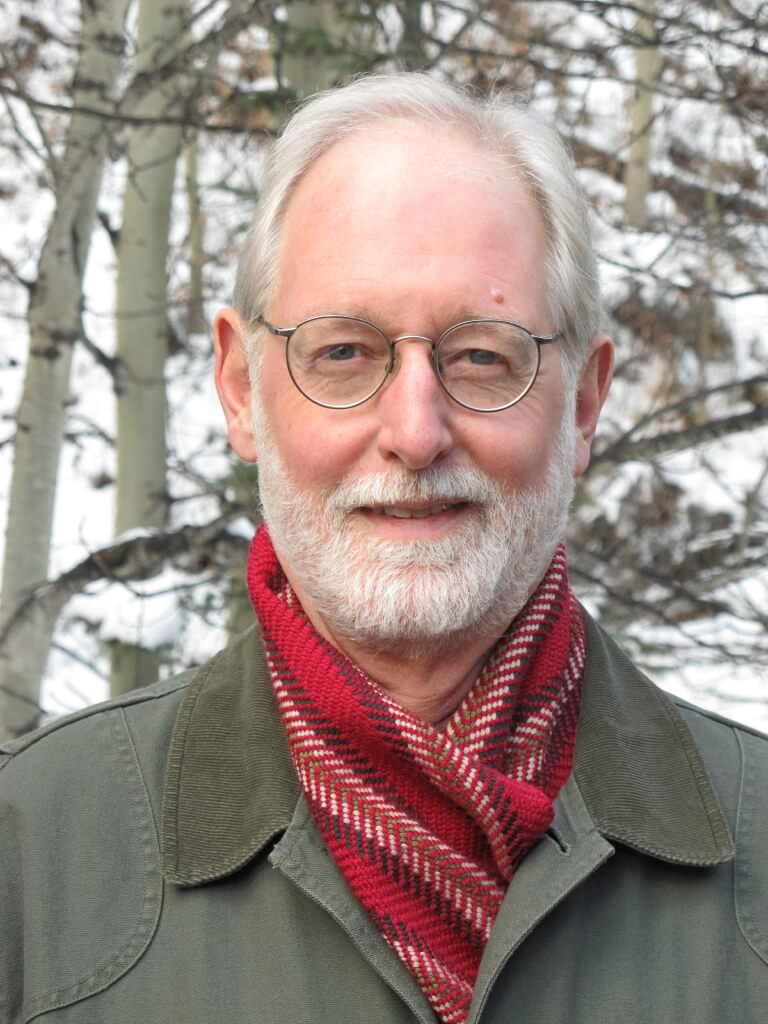
Dr. Robert R. Janes
Yaroslava: Many academics and authors argue that, despite the world’s challenges, life has never been better for our species. To name a few: statistician Hans Rosling’s Factfulness offers “ten reasons why things are better than you think,” psychologist Steven Pinker’s Enlightenment Now celebrates humanism and progress, Hannah Ritchie’s Not the End of the World and A Century of Plenty by the McKinsey Global Institute highlight human achievements and prospects for the prosperous future. In your latest book, however, you write about the inevitability of environmental and societal collapse. How do you reconcile these optimistic accounts with what you describe?
Robert: The technology we’ve developed is extraordinary, and material comfort has improved dramatically — particularly for us in the Global North. I don’t deny that. But I don’t share the optimism of the authors you mention. Current trajectories suggest we are likely to exceed 1.5°C above pre-industrial levels in the coming decades, with a real risk of approaching 2°C if emissions are not sharply reduced. We are also immersed in accelerating deforestation, soil degradation, ocean acidification, and biodiversity loss. Large parts of the Global South are increasingly treated as extraction frontiers. Hunger persists in many regions, even as food waste remains widespread in wealthier nations. We cannot maintain our current way of life simply by adopting new technologies — there are not enough resources to sustain that model for everyone.
These are not speculative claims; they are well documented across the scientific literature. The warning signs of environmental destabilisation are increasingly visible — if we choose to see them. What remains uncertain is how disruption will unfold: through abrupt shocks or gradual decline. It is precisely that uncertainty we must confront honestly. Museums can’t prevent this environmental and societal collapse on their own, but they can reduce its impact, adapt, and promote the well-being of the communities they represent and serve.
The largest self-organised franchise
Yaroslava: Do you think climate change has been presented adequately by the media? Is there a gap that museums could help fill?
Robert: There’s a persistent problem with how scientific consensus is communicated* [link to my earlier article From incredible to credible: How can we communicate science more responsibly?]. Much of the discussion focuses narrowly on global warming and fossil fuels. But what we are facing is a systemic crisis. What most people — including governments and political leaders — don’t realise is that climate trauma is only a symptom of a deeper issue: ecological overshoot, which stems from the mistaken belief that humans are separate from nature. Museums have reinforced this separation. To address it, their codes of ethics need to be revised to explicitly include the More-than-Human World. In reviewing many of these codes, I found that the natural world is rarely even mentioned. That omission is no longer acceptable.
Yaroslava: Much like journalism, museums often operate under ideals of objectivity. Advocacy has long been a contentious term in the museum sector, with many institutions opting for “just the facts.” Why do you find this problematic?
Robert: It’s not just about advocacy; it’s about challenging outdated assumptions and practices. Museums began as imperial collecting institutions, bringing home the wealth of the world and showing it off to others. Over time, they evolved into public institutions focused on education and leisure. Today, for many of them the main preoccupation is consumption: how many visitors attended an exhibition, what food is served in the café — “museums as malls.” Globally, museums may constitute the largest self-organised franchise, with an estimated 95,000 institutions — more than double the roughly 42,000 outlets operated by McDonald’s, the world’s largest commercial franchise. The American cultural critic Neil Postman argued that a competent museum should be an argument with society, introducing ideas that may be painful or uncomfortable to confront. Some museums do this, but most remain on the sidelines. The belief that museums are privileged, detached from everyday life, and concerned only with aesthetics and collections is dangerous. Neutrality is a vote for the status quo — and the status quo is failing us. If they cling to it, museums risk becoming increasingly irrelevant. They need a complete transformation. They should honour the extraordinary public trust they enjoy, starting by revisiting their vision, mission, and purpose.
I have always tried to encourage museums to engage, creatively and courageously, with a fundamental question: What does it mean to be human? Today, at a time when living systems are in decline and when that decline is accelerating, that question feels immeasurably more urgent. Our civilisation needs a new narrative that challenges the belief that continuous economic growth is essential to our well-being. All museums can assist in creating and delivering this narrative, which should be grounded in respect for planet Earth. They can offer historical perspectives, connect scientific evidence with lived experience, provide spaces for communities to reflect on adaptation and resilience, and assist in learning how to live well with less while strengthening social bonds and local capacity.
Small is beautiful
Yaroslava: Historian Dipesh Chakrabarty has called for natural, cultural, and technological histories to be told together rather than being habitually compartmentalised. What do you think about this idea?
Robert: I strongly agree with this approach. Different fields need to come together, as they do in multidisciplinary museums, museum collections, libraries, archives, art and research are integrated under one administration. This type of museum is uncommon but increasingly essential in a complex world. Multidisciplinarity reflects the complexity of how we live and who we are. Yet compartmentalisation dominates everything we do. Part of that comes from training and increasing specialisation — the expert who knows more and more about less and less. I believe in science, but I also believe that local and traditional knowledge are critically important. Museums have to admit that they’re not the ultimate authority on everything; and that they don’t have all the answers. Instead of positioning themselves as experts, they must embrace learning, engage with communities, and build reciprocal relationships.
We are entering a period where localisation, bioregionalism, and personal agency are essential. Many museums are small and embedded in their communities, which positions them to provide leadership — or at least stability and care — as uncertainty grows. Small is beautiful**. I’m inspired by the regenerative movement. Our son, a farmer and orchardist, has a project on a small island off the coast of British Columbia. Each summer, university students take a course there called Alternatives to the Dominant Order. They learn about regenerative agriculture, consensus-building, and local food independence, and then host a community meal using locally grown ingredients. Last year, 350 people attended. Experiences like that suggest other ways of knowing and living — and another role museums could help model.
Countering noise and fakes in the AI age
Yaroslava: How can the rapid development of generative artificial intelligence (AI) influence museums: do you see it as an issue or an opportunity — or both?
Robert: Having never owned a smartphone (only a laptop for email and writing), I have ignored the growing imposition of AI in our daily lives. My indifference ended abruptly when I learned that my publisher sold the rights to six of my museum books to Microsoft for use in their development of large language models (LLMs) and could not answer my questions about how authors were to be credited and how citations would be managed in LLMs.
I understand and appreciate AI’s real and potential value in tasks using digital assistants and search engines for applications in healthcare, transportation, and scientific research, as well as other sectors I am not aware of. Nonetheless, these applications are not sufficient cause for AI’s unbridled and uncritical application. Museums are about the “real” — real people, real families, real communities, real cultures, and real objects; they are a respected source of meaning and can provide a crucial antidote to the endless noise, misinformation, and disinformation proliferating through AI and social media.
It is now widely touted that AI is revolutionising museums by enhancing visitor experiences and streamlining operations. But museums are not commercial enterprises. Will there ever be an end to this neoliberal straitjacket and the reliance on marketplace ideology to gain some sort of undefined importance? I will challenge their fantasy by noting that AI’s impact on water alone is massive. By 2027, AI data centres could consume 6.4 trillion litres of freshwater annually. That’s enough to fill 2.8 million Olympic swimming pools. Microsoft already draws 42% of its water from regions officially classified as “water-stressed.”
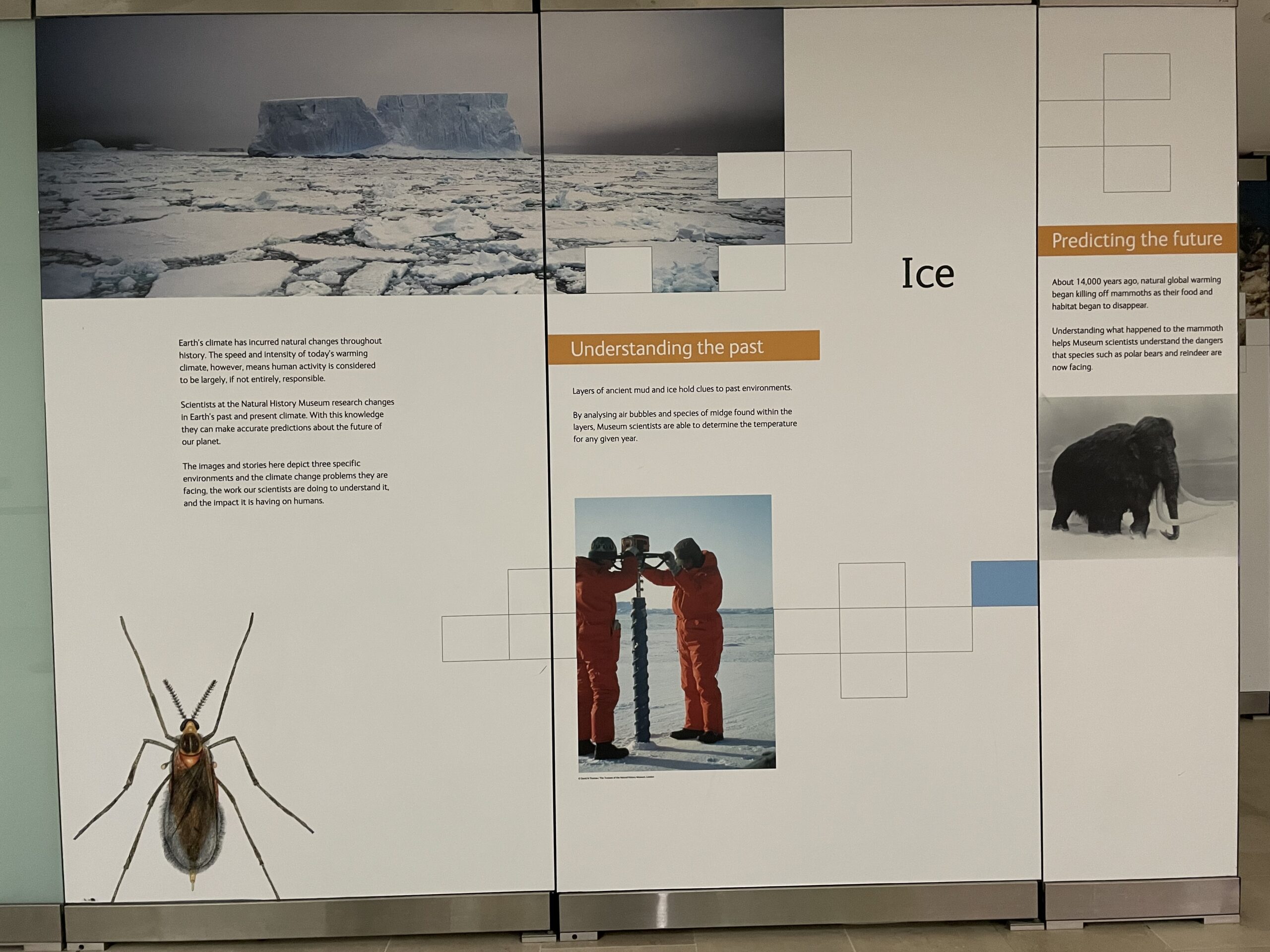
British Natural History Museum in London
Agents of hope and change
Yaroslava: Among many museums you are directly or indirectly linked to, which ones give you the greatest sense of hope today, and why?
Robert: I established two awards to recognise the kind of work that is now required of museums and help build a sense of active hope coupled with action. A variety of museums of different sizes and subject matter have been recognised by these awards.
The first is the Award for Social Responsibility with the Alberta Museums Association, which honours museums that demonstrate meaningful, community-centred engagement beyond standard practice. It is given annually to an Alberta museum that has worked with community groups and stakeholders to create positive change on locally identified social or environmental issues. (Editor’s note: Recent recipients include the Red Deer Museum + Art Gallery, recognised for embedding collaboration and shared authority into its work, and Blackfoot Crossing Historical Park, honoured for leadership in cultural revitalisation and community engagement.)
The second is the Activist Museum Award at the Research Centre for Museums and Galleries at the University of Leicester, which celebrates museum activism — practice aimed at political, social, and environmental change. Each year it recognises two projects — one UK-based and one international — that embody activist thinking in museum work. (Editor’s note: Recent awardees include Museum X, UK, an experimental museum reimagining African and Caribbean heritage, and the Salt Museum in Greece, which promotes sustainable salt harvesting and environmental education.)
Yaroslava: Looking ahead, what do you see as the most urgent ethical challenge museums will face in the coming decades?
Robert: First, museums must acknowledge that business as usual is no longer viable. We’re consuming 1.75 planets’ worth of resources — the planet cannot sustain us. Museums need to reconsider what they preserve and why. What collections will help us navigate uncertainty? What knowledge do they hold that could serve society in a low-energy, less predictable future? I have suggested that museums consider something akin to the Svalbard Global Seed Vault — an archetypal collection safeguarding the most essential elements of our civilisation. But preservation alone is not enough. Museums can build social capital by strengthening cohesion within their communities. They hold Indigenous and traditional wisdom, as well as other ways of knowing that offer perspectives beyond the dominant neoliberal framework. They can synthesise complex issues, providing space for critical dialogue across differences. They offer a deep sense of time, linking past, present, and future in ways that encourage long-term thinking. And they still inspire wonder and curiosity — qualities that help people imagine new possibilities. And finally: gratitude. No matter what we’re talking about, there’s a lot to be grateful for.
________________________________________________
* The “false balance” problem occurs when the media present climate change as a debate between two equally valid sides, despite overwhelming scientific consensus that it is real and human-driven. Studies have shown that giving equal weight to climate denial creates public confusion and underestimates the urgency of the crisis.
** “Small is beautiful” is a phrase popularised by economist E. F. Schumacher in his 1973 book Small Is Beautiful: A Study of Economics As If People Mattered, in which he argues that human-scale, decentralised, and sustainable forms of economic organisation are preferable to large-scale industrial systems, emphasising simplicity, environmental responsibility, and the well-being of individuals and communities.
Bio: Robert R. Janes is an independent scholar-practitioner and a leading voice in critical museum studies. He serves as Editor-in-Chief Emeritus of Museum Management and Curatorship, is a Visiting Fellow at the School of Museum Studies at the University of Leicester (UK), and a Fellow of the Canadian Museums Association. Over the course of his career, he has held senior leadership roles including President and CEO of the Glenbow Museum in Calgary (1989–2000), founding Director of the Prince of Wales Northern Heritage Centre in Yellowknife (1976–1986), and founding Executive Director of the Science Institute of the Northwest Territories (1986–1989). In 2016, he founded the Coalition of Museums for Climate Justice.
Trained as a Subarctic archaeologist, Janes began his career in Canada’s Northwest Territories and has worked extensively with First Nations and Inuit communities. Across nearly five decades — as a director, consultant, author, editor, teacher, archaeologist, philanthropist, and advocate — he has championed museums as socially engaged institutions capable of shaping public life and community well-being His work focuses on museum management and organisational change, institutional ethics, social responsibility activism, and the integration of Indigenous knowledge and repatriation practices.

Tags:climate, climate communication, Interview, science communication